


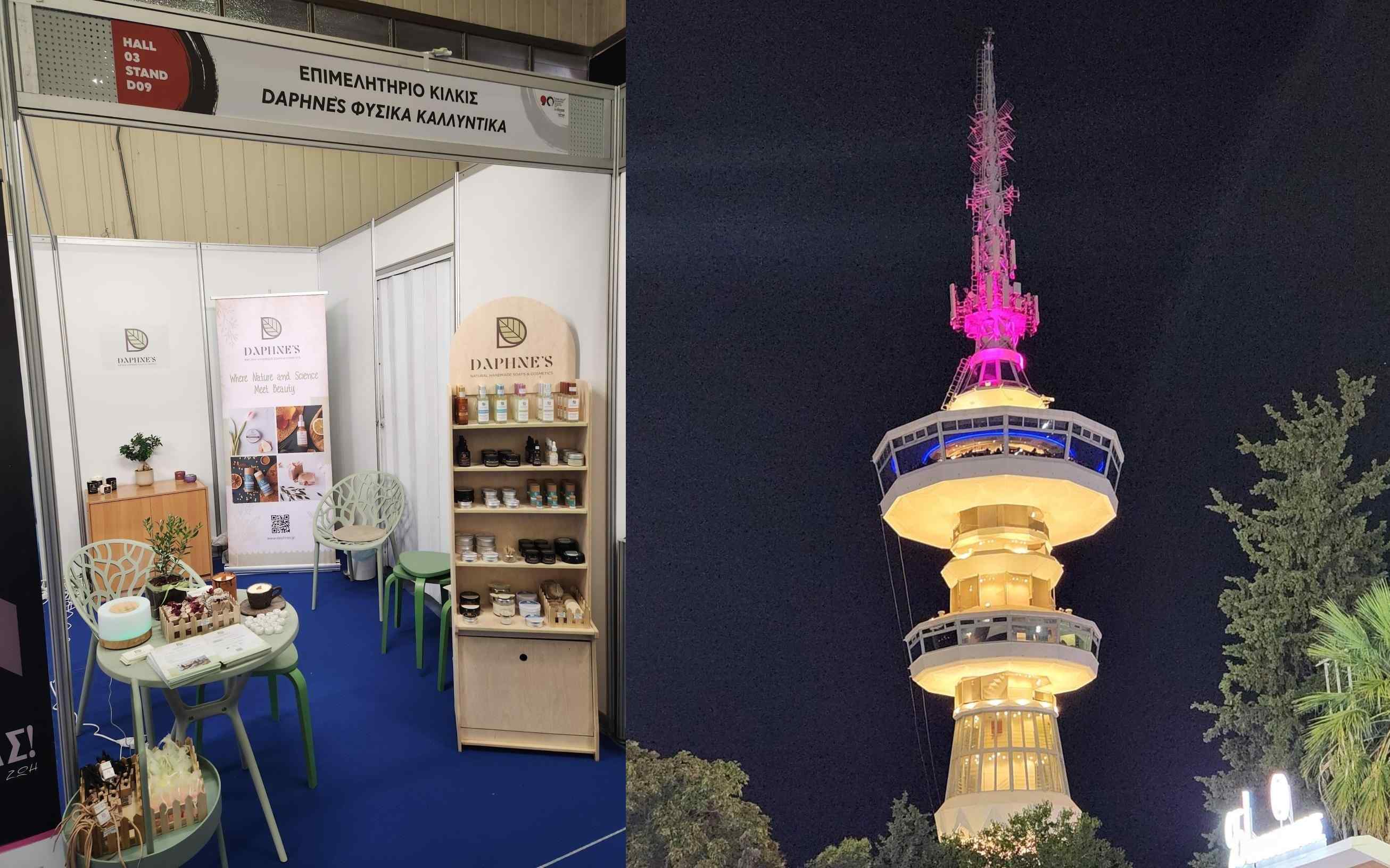
In September 2006, I started my fascinating trip to the world of Sales and throughout all these years, my professional career was spent only in the world of B2B, hence shaping the way that I think about selling. In September 2026 and for nine days, while helping my wife at the six-square meter stand of her company, Daphne's Natural Handmade Soaps & Cosmetics, during the 90th Thessaloniki International Fair (TIF), I stepped into a completely different Sales environment, which proved to be an extremely useful reminder of what selling is really about.
In B2B, Sales cycles can take weeks or even months and customers analyse data, compare alternatives, and may involve multiple stakeholders before deciding. On the other hand, B2C selling looks way simpler from the outside. A customer walks past, notices a product, asks a question or two, and decides whether to buy. In practice though, stepping into an event like TIF, with the floor packed with visitors from all ages and backgrounds, strolling around hundreds of booths in different pavilions, was a masterclass in human behaviour, as every interaction contained a small lesson in attention, trust and storytelling.
Primarily, at an exhibition, there is very little time to earn attention, literally a few seconds, and taking into consideration that our stand was small, our strategy was to approach the customers, rather than waiting for them to take the first step. Our way to earning attention was to politely hand a leaflet, where someone could easily scan and participate in a draw with the chance to win products from Daphne’s, give samples and try to make the appropriate pitch, depending on who was the recipient, in order to inflict interest, which would lead to them approaching the booth and learn more about the products that were on display.
In a fair, product presentation can be a way to create opportunities. Since cosmetics are personal products, people want to see, smell and feel them before deciding, so for all things on display there were testers, ensuring a direct and physical experience. This helped to make the brand more tangible and memorable, while at the same time communicating something that a website description could not. Without a doubt, the products displayed and testers helped to build trust that led to genuine conversations and drove people to learn more not only about the cosmetics that were demonstrated, but also about personal care in general.
Visitors were interested in the products themselves, but their decisions were also influenced by the story behind them. Natural ingredients, handmade production, the identity of the person who created the brand and sharing the feedback from satisfied customers, all mattered. In B2B, we often focus on specifications, ROI, and business value, while in B2C, the product may attract attention, but the story often helps create connection. Customers want to understand what they are buying, why it exists, and whether it reflects their own values. Moreover, emotions frequently lead the decision while logic follows to justify it. Visitors bought the products because they liked the fragrance, the texture, connected with the brand story, or even wanted to support a local female entrepreneur, who is also a mother of three children.
In my view, the biggest takeaway was that Sales fundamentals remain unchanged regardless of the channel. Whether we are discussing a multi-million-euro agreement or a handmade soap, success largely depends on understanding customer needs, building trust, communicating value, and creating a positive experience. On top of that, I learned that selling directly to consumers is a demanding, immediate, and highly personal process, where every interaction matters and there is little room for theory. But above all, my experience helped me to reconfirm the essence of selling: people buy from people.